How to Grocery Shop Without Overthinking Every Aisle
A balanced cart makes for an easier dinner, no label-reading required.
I know how it feels to stand in an aisle, and suddenly everything feels like a test. Is this the right yogurt? Does the bread count against you? Is that bag of granola a red flag or a green light? It's a lot of pressure for an everyday errand, especially when you only have a small window of time to get through the store. But it doesn't have to be that way. As a certified nutrition coach, I want to help you see your cart a little differently.
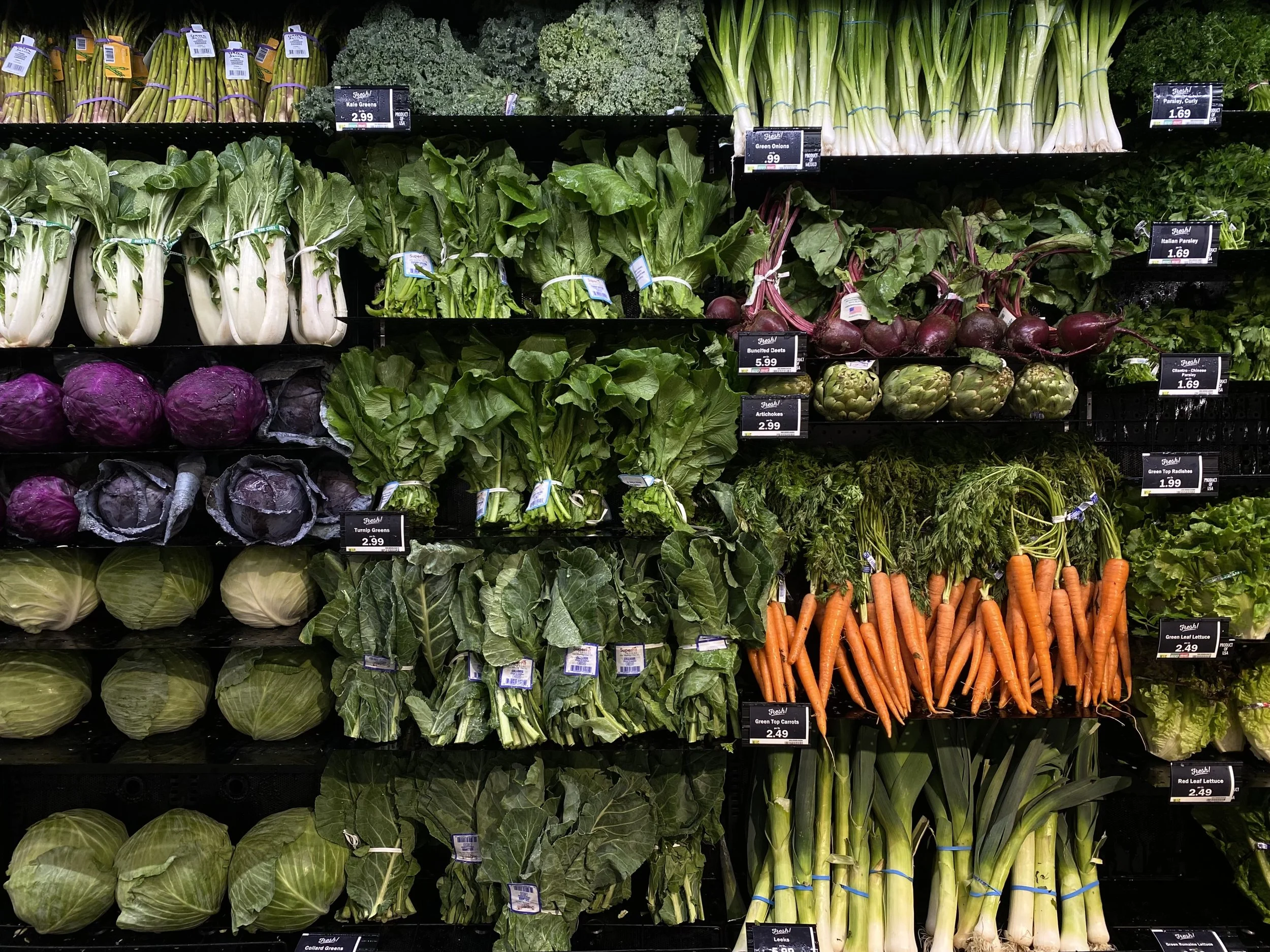
Photo credit: Cora Pursley
The Framework
A balanced cart isn't about getting every choice right. It's the same three parts as a balanced plate, just earlier in the process: a protein, a fat, and a fresh vegetable paired with a carbohydrate source. That's really it. If you read our article on the summer eating framework, this will feel familiar. It's the same framework, just applied a few steps before the plate gets built.
Protein
Protein can be varied, and it probably should be. You don't need to eat the same protein every day to meet your needs. Eggs to top a homemade ramen, a rotisserie chicken for wraps and lunch the next day, extra-firm tofu for a stir-fry with vegetables and rice or quinoa, a bag of frozen shrimp, a couple of cans of beans. A bean salad alone gives you both protein and fiber. Different proteins mean different meals throughout the week, which means less chance of eating the same dinner four nights in a row just because it was easy. If meal prepping is your thing, this approach works well for that, too.
Fat
Fat doesn't need its own aisle. It's already in the cart. Olive oil, a block of cheese, almonds, tahini, an avocado or two. The goal is choosing something that makes a meal come together and tastes like something you'd actually want to eat again.

Photo credit: Rin Owen
Produce and Carbs
Produce and carbs aren't in competition, even though it can feel that way. A bag of spinach and a box of pasta can both be in the cart. So can potatoes and broccoli. The goal isn't picking one over the other. It's having both on hand often enough that dinner comes together without much thought.
Micronutrients Take Care of Themselves
The micronutrients we hear so much about tend to fall into place here, too. Leafy greens, citrus, a dozen eggs, and you're already picking up folate, vitamin C, and choline without shopping for any of them specifically.
None of this requires reading every label or being careful in every aisle. A balanced cart isn't the one with the fewest questionable items in it. It's the one with enough of the right categories that a Wednesday dinner comes together as easily as a Sunday one.
The trip doesn't need a strategy. It just needs the same pattern, and if you follow this framework, dinner gets easier to manage, and better tasting, too.