How to Choose the Right Rug Size (And Why Most People Get It Wrong)
A rug that's sized right can fix almost everything else that feels off in a room.
If a room has ever felt slightly off and you couldn’t figure out why, there’s a good chance the rug is the problem. It’s the single most common styling mistake in home decor, and it’s an easy one to make, because most people size a rug the way they’d size a bath mat: pick something that looks about right and drop it in the middle of the room.
A rug is a piece that defines the room. Get the size wrong, and everything sitting on it—your sofa, your bed, your dining table—starts to look like it’s floating instead of grounded.
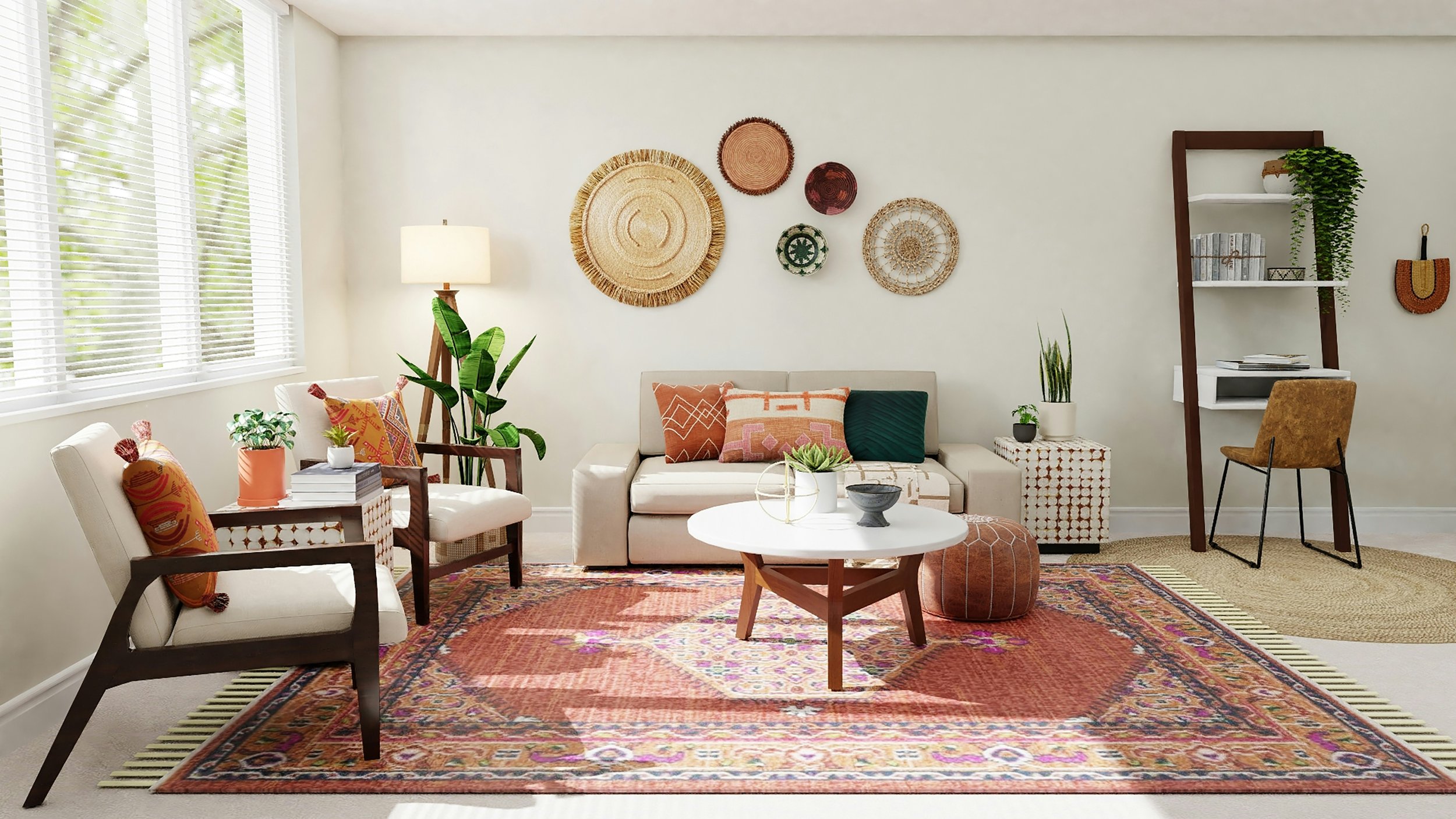
Photo credit: Spacejoy
The Rule That Fixes Almost Every Rug Mistake
Your furniture should touch the rug, not hover near it. At minimum, the front legs of your major pieces (sofa, chairs, bed) should sit on the rug. Ideally, all four legs do. A rug that only the coffee table touches, while the sofa sits an inch off the edge, is the number one reason a living room feels unanchored without anyone being able to say why.
Living Room
Go bigger than feels intuitive. A common mistake is sizing the rug to the coffee table rather than the entire seating arrangement. Instead, size it to fit the full conversation area, sofa, chairs, and the coffee table between them, with all the front legs of your seating landing on the rug. For most living rooms, that means an 8x10 or 9x12, not the 5x7 most people default to.
Dining Room
The test here is simple: pull a chair out from the table. If the back legs come off the rug when someone pushes their chair back, the rug is too small. As a general guide, add at least 2 feet of rug beyond each edge of the table, so chairs stay fully on the rug even when pulled out mid-meal.
Bedroom
You have two solid options, and which one you choose depends on the room. A rug large enough to extend about 2 feet beyond each side of the bed, so your feet land on it when getting up, creates a grounded, finished look. If a full rug is out of budget or the room is small, two smaller runners on either side of the bed work almost as well, and they’re a lot cheaper than one oversized rug.
Entryway and Small Spaces
This is the one place where a smaller rug is correct. An entryway rug should be a defined moment, not an attempt to cover the whole space. Leave a visible border of floor around it. The goal is a landing pad, not wall-to-wall coverage.
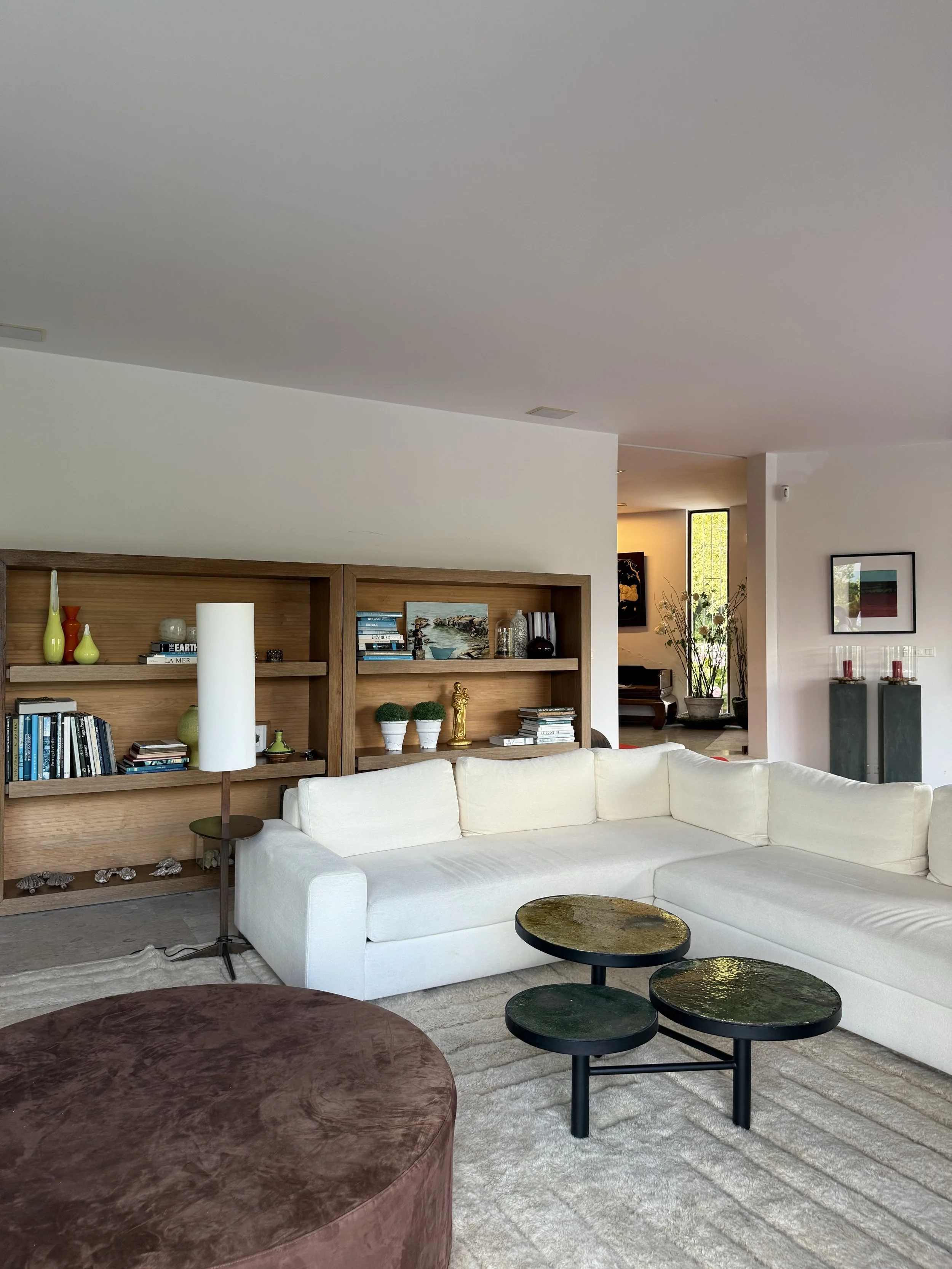
Photo credit: Malala Alonso
The Border Rule, if You Want a Formula
For most rooms, leave somewhere between 12 and 18 inches of bare floor visible around the rug’s edges. Any less and the rug reads as an afterthought squeezed into the space. Any more and the room starts to feel like the rug is on an island. This one rule alone solves most sizing dilemmas without needing to measure every piece of furniture individually.
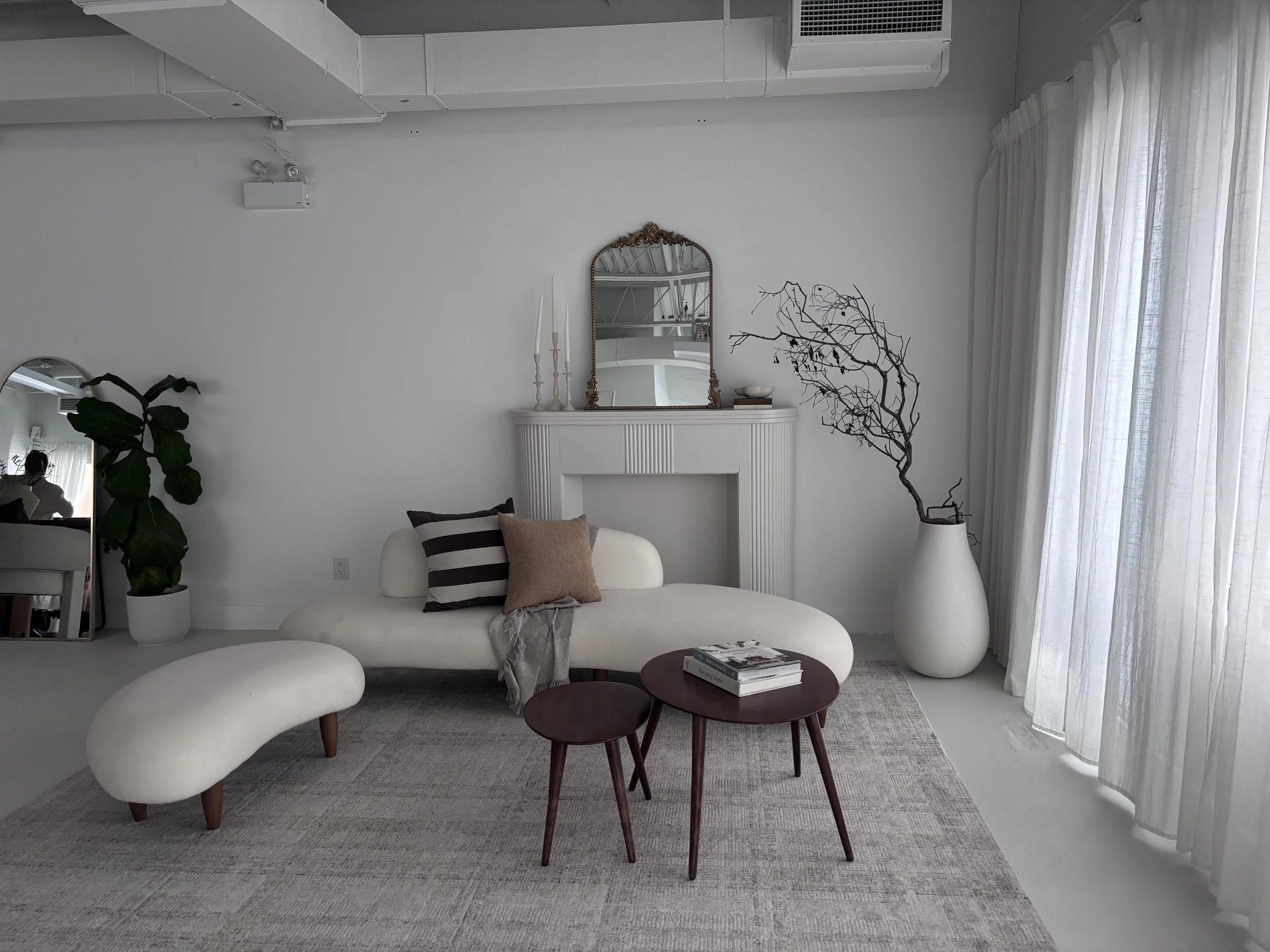
Photo credit: Abbey Cole
The Mistakes Worth Avoiding
Buying Based on What’s in Stock
Rug sizing should start with your room’s measurements, not with whatever size happens to be on sale. It’s worth measuring first and shopping second, even if that means special-ordering a size.
Centering the Rug on the Room Instead of the Furniture
A room is rarely a perfect square, and neither is your furniture arrangement. Center the rug on your seating or bed, not on the four walls.
Assuming a Bigger Rug Will Feel Like “Too Much”
In almost every case we’ve seen, the rug people think is too big is actually the correct size, and the one they think looks fine is a size too small. If you’re stuck between two sizes, size up.
A rug is one of the few pieces in a home that changes how a whole room reads, not just how one corner of it looks. Getting the size right costs nothing extra. It just means measuring before you shop, and trusting that bigger is very often the more finished choice, even when it feels like a stretch.