8 Fruits and Vegetables to Add to Your Cart This Fall
From apples to beets, here’s what’s worth grabbing this season.
Pumpkin may get most of the attention, but the fall produce section has range. Apples are everywhere, pears are finally good again, and vegetables that were ignored all summer suddenly sound much more exciting once the roasting season begins.
Exactly what’s in season depends on where you live, but these eight fruits and vegetables are a good place to start.
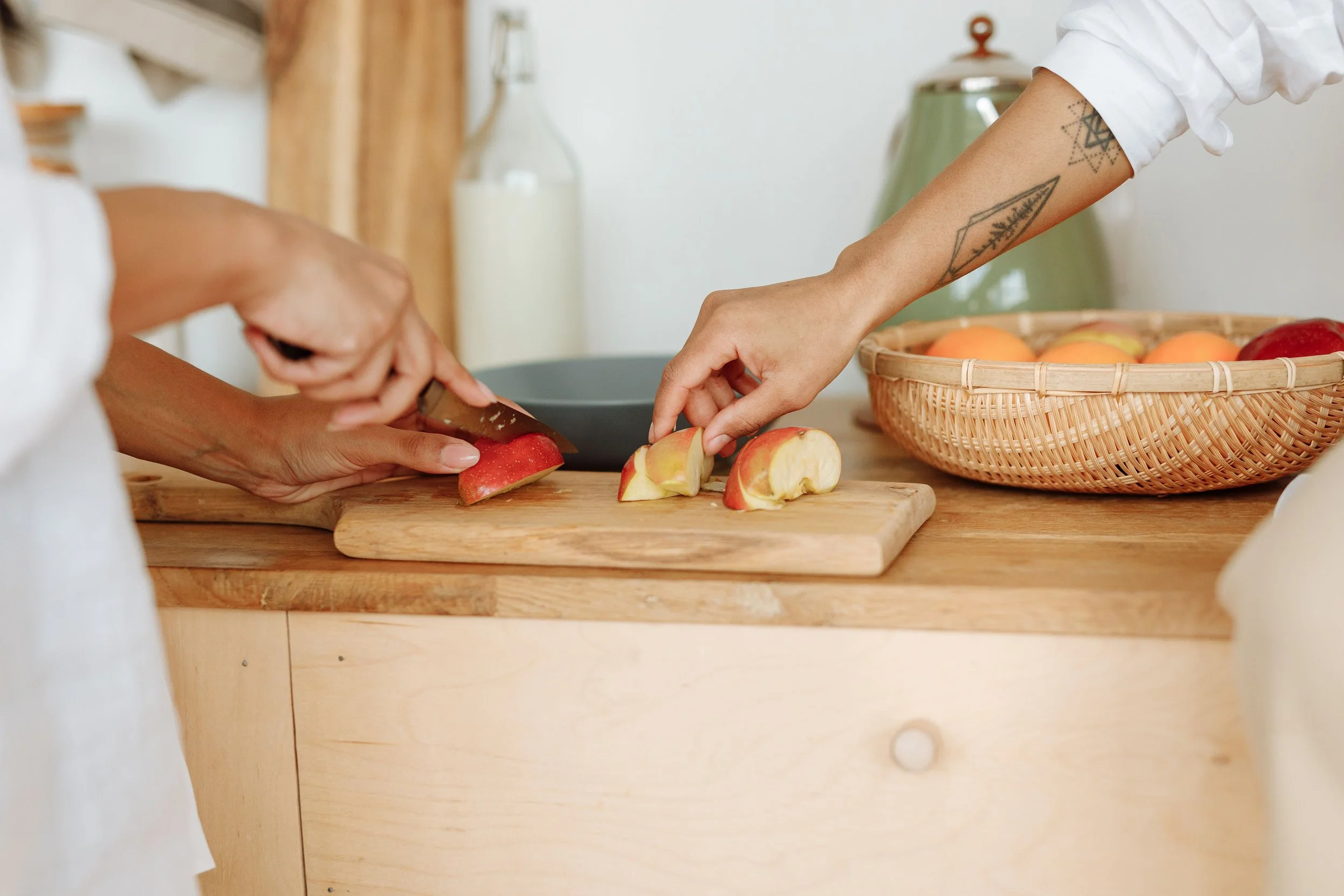
Photo credit: Thirdman
Apples
We have to start with the obvious one. Apples are a source of fiber and vitamin C, especially when you keep the skin on. There are also enough varieties to keep things interesting.
Honeycrisp and Fuji are great for snacking, while Granny Smith holds up well in baking. Slice one into oatmeal, eat it with peanut butter, toss it into a salad, or make the apple crisp you have been thinking about since last fall.
Pears
Pears don’t get nearly as much fall attention as apples, but they should. They provide fiber, vitamin C, and copper, and keeping the skin on gives you more of that fiber.
The only challenge is catching them during the very short window between rock hard and suddenly overripe. Add them to salads, bake them with cinnamon, pile them onto toast, or eat one over the sink and accept the mess.
Cranberries
Fresh cranberries are much more tart than the sweetened dried ones you may already know. They provide fiber, vitamin C, and polyphenols, which are naturally occurring plant compounds.
Cook them into sauces, compotes, oatmeal, or baked goods. You can also roast them with a little maple syrup and spoon them over yogurt or toast. Dried cranberries still count too, but many contain added sugar, so they are a little different nutritionally from the fresh fruit.
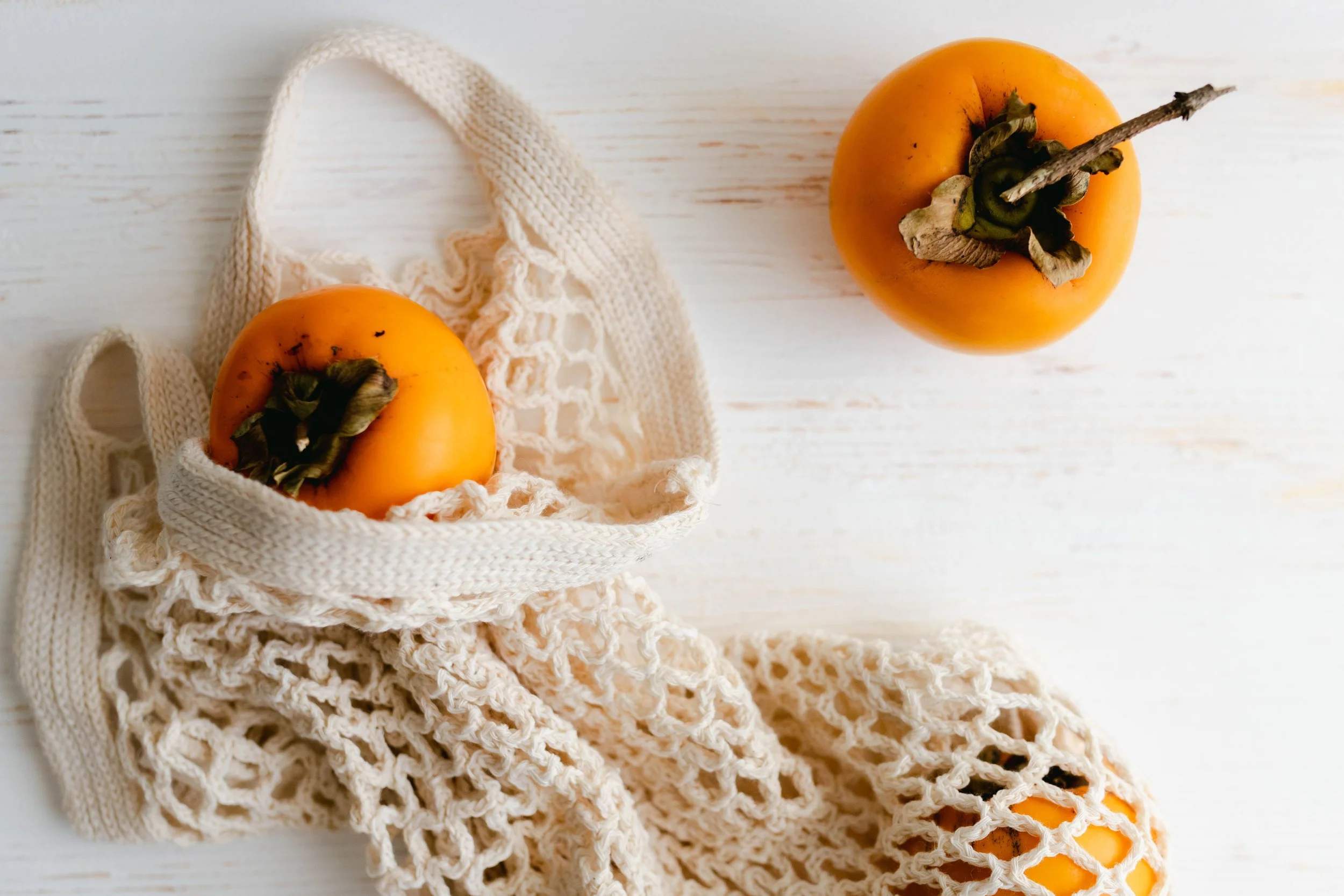
Photo credit: Visual Stories by Tugba
Persimmons
If you keep walking past persimmons because you’re not entirely sure what to do with them, this is your sign to grab a few. They provide fiber, vitamin C, and carotenoids, which give them their beautiful orange color.
Fuyu persimmons can be eaten while they are still firm, almost like an apple. Hachiya persimmons need to become extremely soft first, or your mouth will immediately regret the decision. Slice them into oatmeal or salads, add them to toast, bake with them, or eat them as they are.
Sweet Potatoes
Sweet potatoes bring fiber, potassium, vitamin C, and beta-carotene to the table. The body can convert beta-carotene into vitamin A, and the orange varieties are especially rich in it. Purple sweet potatoes contain different pigments called anthocyanins.
Roast or air-fry them, mash them, add them to curries, or stuff them with beans and greens for an easy dinner. Pairing them with something like olive oil, tahini, avocado, or nuts also helps your body absorb their fat-soluble carotenoids.
Winter Squash
Butternut, acorn, delicata, kabocha, and spaghetti squash are all part of the winter squash family. Depending on the variety, they provide fiber, potassium, vitamin C, and carotenoids such as beta-carotene.
Delicata squash is especially easy because the skin is edible, which means no wrestling with a vegetable peeler. Roast it for a grain bowl, blend butternut squash into soup or pasta sauce, or stuff an acorn squash with grains, lentils, or sausage.
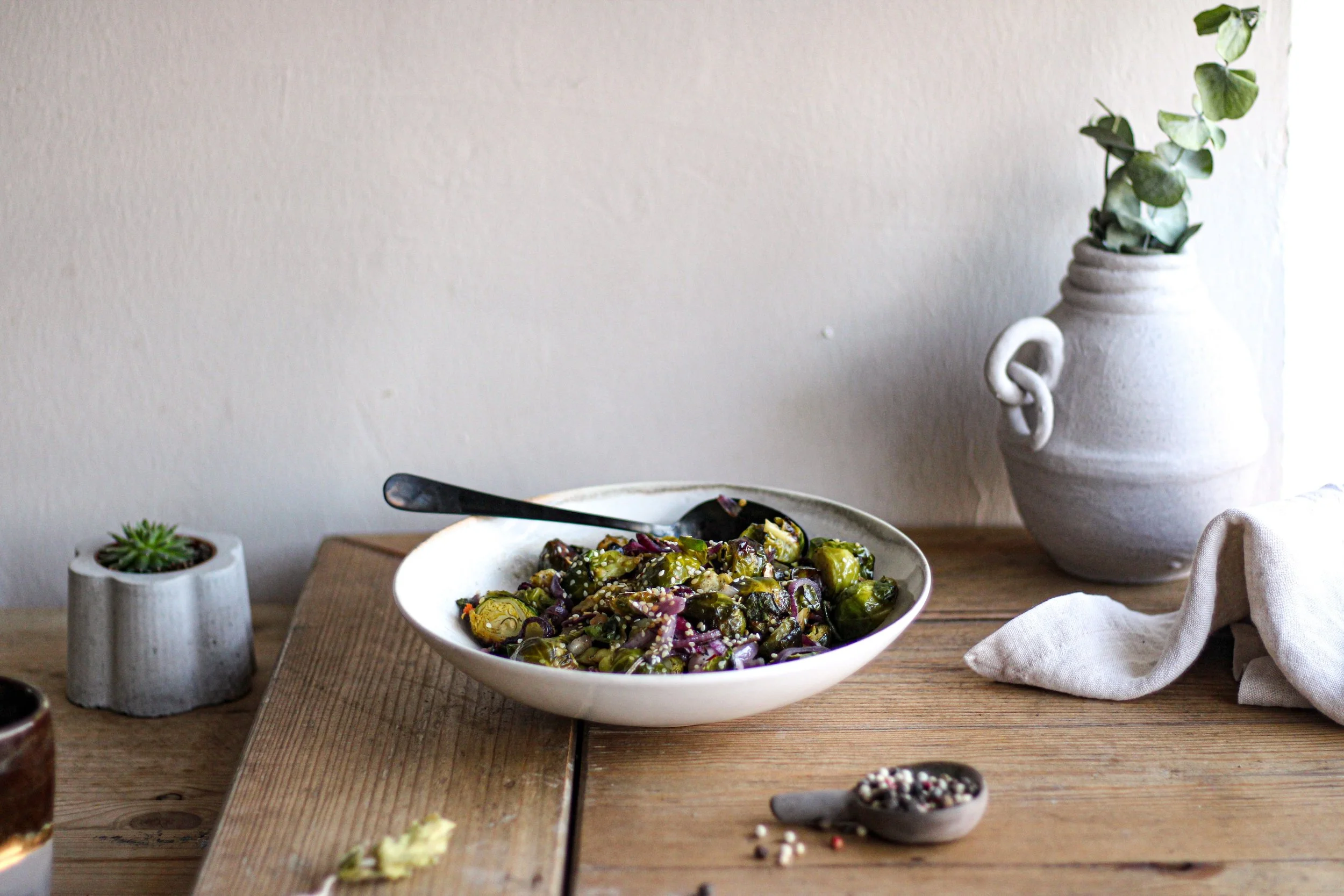
Photo credit: Kubra Dogu
Brussels Sprouts
Brussels sprouts provide fiber, folate, vitamin C, and vitamin K. If your only memory of them involves something soft and overcooked from childhood, it may be time to give them another chance.
Roast them at a high temperature until the edges are deeply browned, shave them into a salad, or sauté them with garlic. Add something acidic or slightly sweet, like balsamic vinegar, lemon juice, Dijon mustard, or maple syrup, and they are very hard to stop eating.
Beets
Beets provide fiber, folate, potassium, and manganese. The greens are edible too, so you are really getting two vegetables in one.
Roast or air-fry the roots, blend them into hummus, or add them to salads with something creamy and something acidic. Sauté the greens like Swiss chard or throw them into a soup. Just remember that beets stain absolutely everything, including the cutting board you were sure would be fine.
One Last Thing
Eating seasonally is a fun way to switch up what you cook, but it doesn’t need to become another food rule. Fresh, frozen, and canned fruits and vegetables can all bring valuable nutrients to your meals.
Use this list as inspiration, choose what looks good where you shop, and make something you are actually excited to eat.