

The Best Part of Seed Cycling May Be the Seeds Themselves
Eating seeds is nutritious all month, but no one knows yet whether timing them to your cycle really matters.
Seed cycling is one of those wellness practices that sounds believable the first time you hear it. Eat flax and pumpkin seeds during the first half of your menstrual cycle, then switch to sesame and sunflower seeds for the second half; each combination is said to support the hormones your body needs during that phase.
It’s simple enough to try without making many changes. Add the seeds to oatmeal, blend them into a smoothie, sprinkle them over lunch, and wait to see whether your period becomes easier, your cycle becomes more regular, or your hormones finally feel “balanced.”
The seeds can absolutely make your meals more nutritious. Whether rotating them according to your cycle is responsible for anything beyond that is harder to prove.
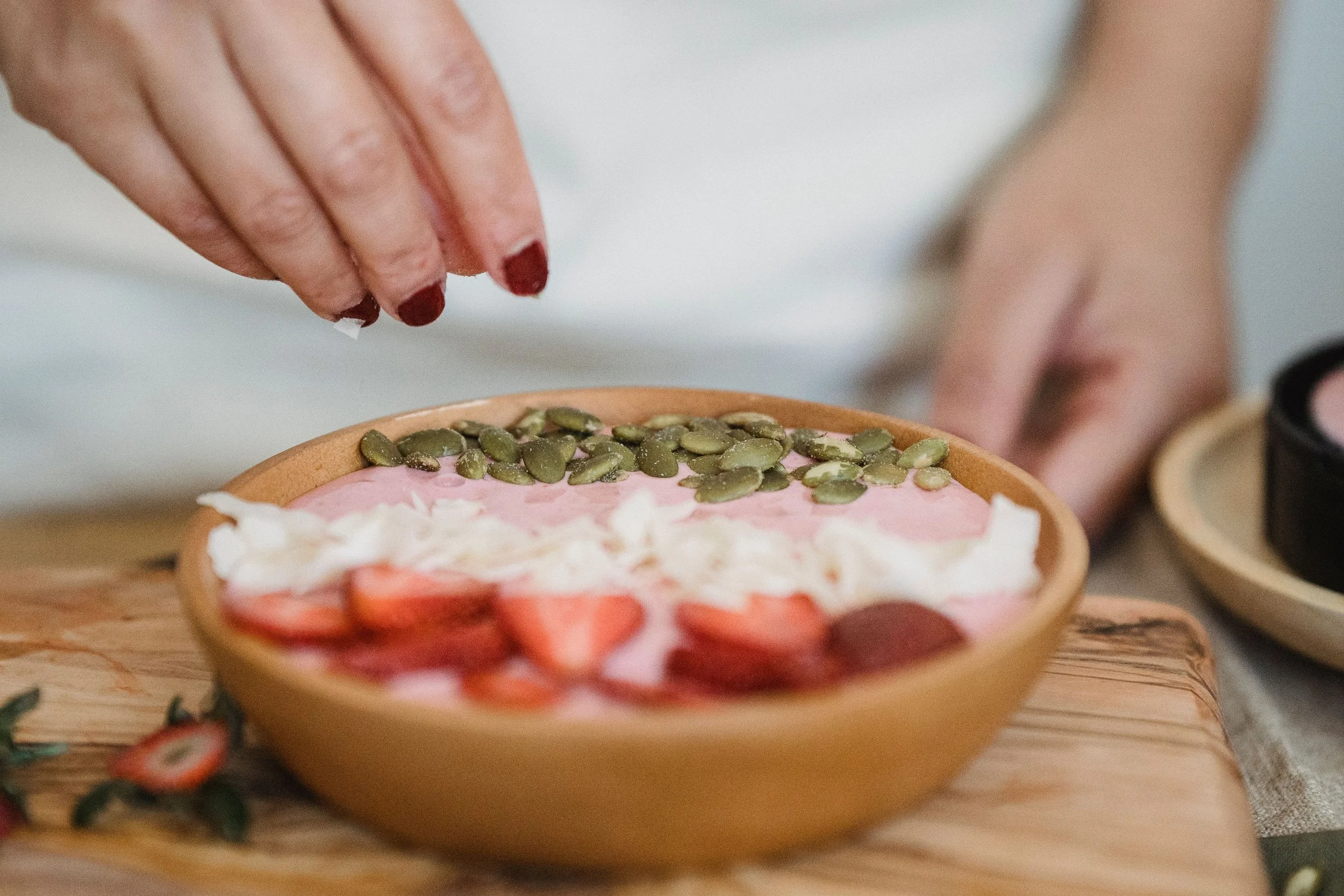
Photo credit: Nicola Barts
Start With the Four Seeds
From the first day of your period through ovulation, the traditional seed-cycling schedule pairs flax with pumpkin seeds. After ovulation, you switch to sesame and sunflower seeds until your next period begins.
The theory gives every seed a specific job. Flax is often connected to estrogen because it contains lignans. Pumpkin seeds provide zinc and magnesium. Sesame seeds bring another source of lignans, while sunflower seeds contribute vitamin E.
These are all useful nutrients, but hormones aren’t waiting for a seed delivery before moving into the next phase of the cycle. Eating pumpkin seeds during your luteal phase instead of your follicular phase doesn’t suddenly make them less nutritious.
The Research Is Still Early
Seed cycling hasn’t been studied as extensively as its popularity may suggest.
A 2025 review looked at 10 studies involving women with PMS or PCOS (now PMOS). Some reported improvements in menstrual regularity, PMS symptoms, hormone levels, or metabolic health. That gives researchers a reason to keep looking, but it doesn’t prove that everyone should begin rotating her seeds.
The studies were small and didn’t all test the same thing. Some focused on a single seed rather than the entire rotation. Others added seed cycling to medication, exercise, supplements, or a larger nutrition plan, which makes it difficult to give the seeds all the credit.
There may be something useful here. There just isn’t enough research yet to say the phase-specific timing is what makes the difference.
Photo credit: Blue Bird
Eat the Seeds Because They’re Good Food
Flax, pumpkin, sesame, and sunflower seeds provide fiber, plant protein, healthy fats, and a mix of vitamins and minerals. Eating more of them is a good idea whether you follow the schedule or forget which phase you’re in by Wednesday.
I add seeds to meals all the time, but I don’t organize them around my cycle. My current favorite is PlantChi’s Cheese Tease, which I’ve purchased twice and sprinkle on nearly everything savory.
It combines hemp hearts, nutritional yeast, garlic powder, sunflower seeds, chia seeds, puffed amaranth, and pumpkin seed protein. That mix adds plant protein, fiber, healthy fats, vitamin E, magnesium, zinc, iron, and vitamin B12 from the fortified nutritional yeast. It also adds a cheesy, savory flavor that works on roasted vegetables, grain bowls, pasta, avocado toast, and popcorn.
I use it because it tastes good and makes meals I already enjoy more nutrient-dense. There is no cycle-day calculation involved.
Try It Without Turning It Into Treatment
If seed cycling helps you eat a wider variety of seeds consistently, try it for a few months and see how you feel. A defined trial is more useful than committing to another wellness practice indefinitely because someone online said it would fix your hormones.
Keep the expectations reasonable. Seed cycling shouldn’t replace care for missing periods, severe PMS, fertility concerns, PMOS, endometriosis, or symptoms that regularly interfere with your life.
And if separating four seeds into two phases becomes more complicated than helpful, abandon the schedule and keep eating the seeds.
The most reliable benefit of seed cycling may be that it helps you get more nutrient-rich food onto your plate. That’s less exciting than promising perfectly balanced hormones, but it’s still a good enough reason to keep the pumpkin seeds nearby.