Listening Bars Are the New Luxury Hotel Amenity
Across Europe, a growing number of design-forward hotels are turning music, vinyl culture, and intentional listening into part of the hospitality experience itself.
The soundtrack of travel is becoming just as important as the design of the hotel. Across cities like Athens, Amsterdam, London, and Barcelona, a growing number of hotels are building entire experiences around listening culture, transforming lobbies, cocktail bars, and communal spaces into destinations where music feels just as considered as the interiors themselves. Vinyl records, curated DJ sets, jazz sessions, audiophile sound systems, and listening bars are increasingly becoming part of how people choose where they stay, dine, and socialize while traveling.
After years of overstimulation and hyper-digital living, analog culture has steadily regained relevance, from vinyl records and film photography to bookstores and listening lounges.
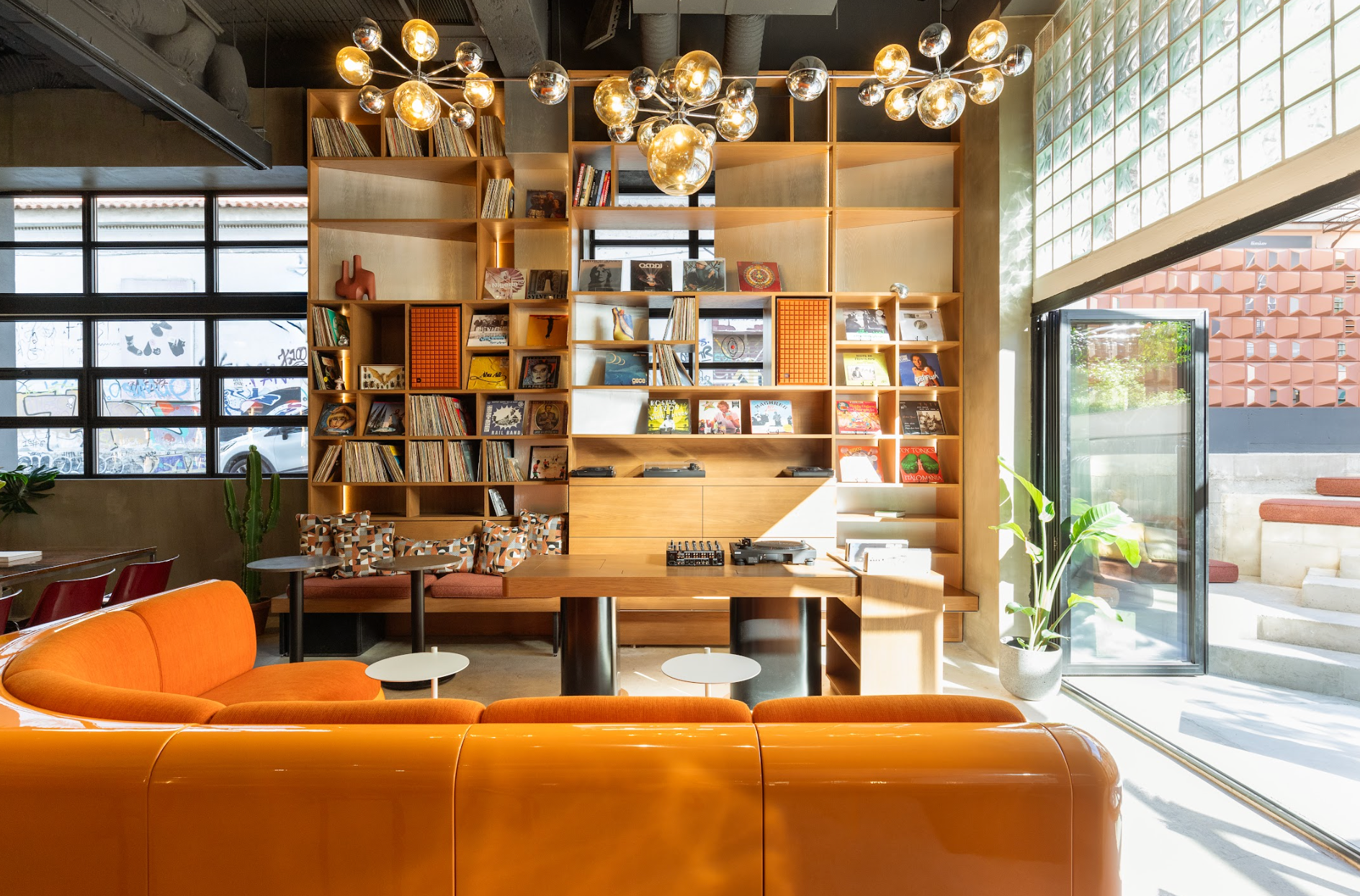
Photo credit: Okupa
Hotels Are Becoming Cultural Spaces Again
What makes this movement feel different from traditional nightlife is that music is no longer treated as background noise. In many of these spaces, sound becomes part of the hotel’s identity.
In Athens, Okupa has emerged as one of the clearest examples of that approach. The Greek hotel has built much of its vibe around vinyl culture, curated music, and communal gathering. At the center of the property is its Kitchen & Listening Bar, where DJ-led evenings, jazz sessions, live performances, and cultural programming bring together both travelers and local creatives.
The concept feels reflective of a broader evolution happening within hospitality, where hotels are increasingly functioning more like social environments people want to spend time in rather than temporary accommodations.
Why Analong Experiences Feel So Appealing Right Now
Part of what makes listening bars resonate so strongly is that they encourage a completely different pace than most modern nightlife spaces.
Instead of crowded clubs built around constant stimulation, these environments prioritize conversation and sitting with sound in a more thoughtful way. Vinyl culture invites people to linger longer, pay attention, and experience music collectively rather than passively.
That slower energy feels aligned with the way most people want to travel now. Increasingly, travelers are seeking environments that feel connected to local culture and creative communities rather than generic luxury alone.
The Hotels Leading the Movement Across Europe
Okupa is far from the only property embracing this direction. In London, Virgin Hotels London-Shoreditch introduced Hidden Grooves, a listening-focused venue inspired by 1970s audiophile culture, complete with vintage speakers, vinyl sessions, and album-inspired cocktails. In Amsterdam, Volkshotel’s underground listening venue Doka has developed a cult following centered around pristine sound quality and natural wines.
Meanwhile, Barcelona’s Casa Bonay continues to blur the lines between hotel, restaurant, rooftop gathering space, and creative hub through regular vinyl sessions and music-led events integrated directly into the property’s social atmosphere.
Despite their differences, these hotels all reflect a similar idea that people no longer want travel to feel disconnected from culture itself.
Travel Is Becoming More Atmosphere-Driven
For years, travel culture centered heavily around checklists: landmarks, packed itineraries, that perfect photo moment for Instagram, and must-snag reservations. Increasingly, however, the places people remember most are the ones that create a distinct feeling.
The rise of listening-led hospitality reflects this clearly. Music has become another way hotels influence identity, community, and the emotional experience within a destination.
And in many ways, the growing popularity of these spaces suggests that people are not just searching for somewhere “aesthetic” to stay anymore. They want to stay in places that feel alive.